
Dental Implant Survival Rates: What 10-Year Studies Reveal
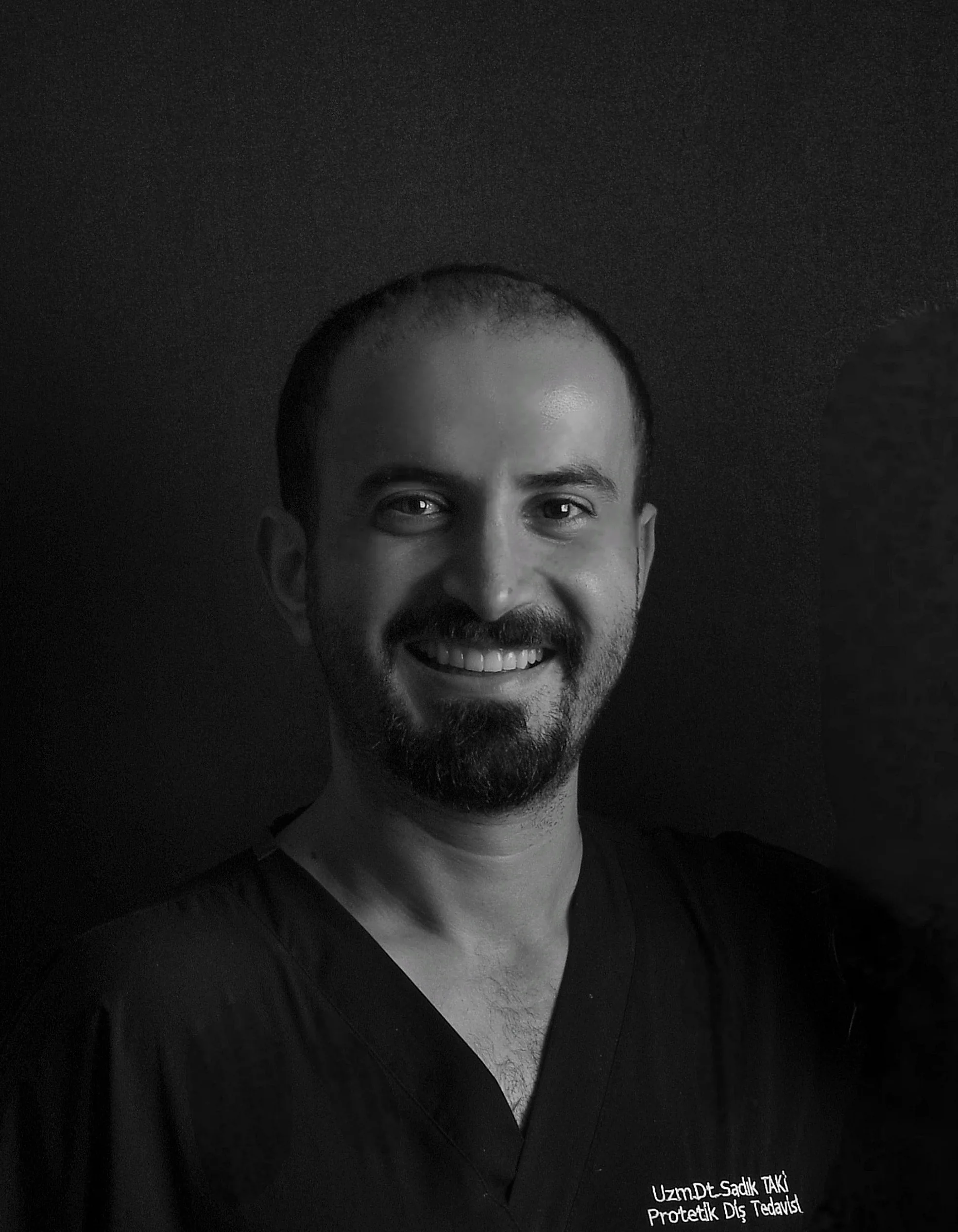
Dental Expert
TABLE OF CONTENTS
When patients ask whether their investment will last, the honest answer lies in the data on dental implant survival rates. Titanium implants have now been studied for decades, and the highest-quality long-term research follows patients for a full ten years or more. That body of evidence gives us something rare in dentistry: a confident, numbers-based picture of what to expect. At Taki Dent in Antalya, Dr. Sadık Taki grounds every treatment plan in this literature rather than marketing promises, and this article summarises what the 10-year studies actually show.
What the 10-Year Evidence Shows About Dental Implant Survival Rates
A systematic review and meta-analysis by Howe, Keys and Richards (2019) pooled long-term data and reported implant survival of roughly 96 to 97 per cent at ten years. In practical terms, that means the large majority of implants placed today are still functioning a decade later. A separate systematic review by Moraschini and colleagues (2015), which examined only studies with a minimum follow-up of ten years, found a mean survival rate of around 94.6 per cent and a mean success rate close to 89.7 per cent.
It is worth drawing a clear distinction between two terms that are often confused:
- Survival means the implant is still in the mouth and doing its job.
- Success is a stricter measure that also requires healthy surrounding bone, no infection, no pain, and stable soft tissue.
Success rates always run a little lower than survival rates because the bar is higher. Both figures, however, place well-planned dental implants in Antalya among the most predictable procedures in modern medicine.
Survival vs Success: Reading the Numbers Honestly
Dr. Taki's clinical perspective is that patients deserve context, not just a headline percentage. A 96 per cent survival rate does not mean four in a hundred implants fail dramatically. Most so-called failures involve minor complications that are managed before they threaten the implant, and true losses tend to cluster either very early (before the bone fully integrates) or much later when neglected gum disease sets in.
| Measure | Typical 10-Year Figure | What It Tells You |
|---|---|---|
| Survival rate | Approximately 94.6 to 97 per cent | The implant is still in place and functional |
| Success rate | Approximately 89 to 90 per cent | Implant plus healthy bone and tissue, no complications |
| Early failure | Less than 2 per cent of cases | Usually related to integration or infection in the first months |
These figures reflect averages across many clinics and many patient types. Your individual outlook depends heavily on the factors described below, which is why a thorough consultation matters more than any single statistic.
Factors That Influence Long-Term Implant Survival
The 10-year literature repeatedly highlights a consistent set of variables. Understanding them helps you see where you can genuinely influence your own outcome.
Bone quality and quantity
An implant is only as stable as the bone that holds it. Patients with adequate volume and density tend to see the strongest long-term results. Where bone is limited, grafting or a tailored approach such as the All-on-4 technique can restore a reliable foundation. During planning, 3D imaging lets us measure available bone precisely before a single implant is placed.
Oral hygiene and maintenance
Peri-implantitis, an inflammatory condition affecting the tissue around an implant, is the leading cause of late failure. Studies consistently show that patients who maintain excellent hygiene and attend regular check-ups enjoy markedly better survival. Implants do not decay, but the gum and bone around them are just as vulnerable to plaque as natural teeth.
Smoking and systemic health
Smoking impairs healing and is associated with higher failure rates in the long-term data. Well-controlled general health supports osseointegration, whereas uncontrolled conditions such as poorly managed diabetes can compromise it. None of these factors is an automatic barrier, but each one shapes the plan.
Surgical planning and prosthetic design
How an implant is positioned, and how the crown or bridge on top distributes bite forces, has a direct bearing on longevity. Overloaded or poorly angled restorations place stress on the bone. This is where prosthodontic expertise, the specialty Dr. Taki practises, adds real long-term value.
Single Implants vs Full-Arch Solutions
The long-term evidence covers a range of scenarios, from a single missing tooth to a full arch. Both single crowns and full-arch restorations report high survival when planned well, though the maintenance demands differ.
- Single implants are straightforward to clean and monitor, and they preserve the neighbouring teeth that a bridge would otherwise have to be anchored to.
- Full-arch options such as All-on-6 restorations and full-mouth restoration replace an entire row of teeth on a small number of implants and deliver excellent function, provided the patient commits to diligent daily care.
Dr. Taki's approach is to match the solution to the mouth in front of him rather than applying one formula to everyone. The right design at the outset is one of the strongest predictors of a good ten-year result.
How to Protect Your Implants for the Long Term
The reassuring message from a decade of research is that patients hold much of the outcome in their own hands. To give your implants the best chance of reaching and exceeding these survival figures, we typically recommend:
- Brushing twice daily and cleaning between teeth and implants every day.
- Attending professional cleanings and check-ups, usually every six months.
- Avoiding smoking, which the evidence links to higher failure rates.
- Reporting any bleeding, swelling or looseness promptly rather than waiting.
- Wearing a night guard if you grind your teeth, to reduce mechanical stress.
Consistent maintenance is not a minor detail; in the long-term studies it is one of the clearest dividing lines between implants that thrive and those that struggle. If you would like to understand how these numbers translate to your own case, our team is happy to walk you through the evidence and view our before and after results together, or you can explore transparent treatment prices before you decide.
The Taki Dent Perspective on Survival Rates
Ten-year data is powerful because it removes guesswork. It confirms that dental implants, when planned by an experienced clinician and cared for properly, are a durable and highly predictable way to replace missing teeth. What it cannot do is guarantee an individual result, and any clinic that promises certainty is overstating the science. Our commitment at Taki Dent is to combine this evidence with meticulous planning, quality implant systems, and honest guidance, all backed by our treatment guarantee. To learn more about the specialist behind your care, you can read about Dr. Sadık Taki and his prosthodontic background.
Scientific References
This article reflects current peer-reviewed evidence. Key sources include:
- Howe, M.-S., Keys, W., & Richards, D. (2019). Long-term (10-year) dental implant survival: A systematic review and sensitivity meta-analysis. Journal of Dentistry. https://doi.org/10.1016/j.jdent.2019.03.008
- Moraschini, V., Poubel, L. A. d. C., Ferreira, V. F., & Barboza, E. d. S. P. (2015). Evaluation of survival and success rates of dental implants reported in longitudinal studies with a follow-up period of at least 10 years: a systematic review. International Journal of Oral and Maxillofacial Surgery. https://doi.org/10.1016/j.ijom.2014.10.023
Evidence summarised for patient education by Dr. Sadık Taki. Individual outcomes vary; book a consultation for personalised advice.
To find out what these survival rates mean for your smile, book a free consultation with our specialists today.
Ready to Transform Your Smile?
Book your free consultation with our specialist team today.
Schedule Consultation