
Are Veneers in Turkey Safe? A Patient Safety Guide
Dental Expert
TABLE OF CONTENTS
You have seen the transformations on social media, you have seen the prices, and now you are asking the only question that really matters: are veneers in Turkey safe? As a prosthodontist practising in Antalya, my honest answer is: yes — at the right clinic, with the right dentist and the right treatment plan; and no — if you choose on price alone and skip the checks. The variable is not the country. It is the clinic. This guide explains the real risks, how to verify a provider, and the questions that protect you.
The Honest Context Behind the Headlines
Turkey treats hundreds of thousands of international dental patients every year, and the overwhelming majority go home satisfied. Turkish dental education is a five-year university degree, clinics treating international patients are licensed and inspected by the Ministry of Health, and leading clinics work with the same materials used in London or Berlin — E.max, zirconia, Swiss and German implant systems. At the same time, the horror stories you have read are usually real. Almost all trace back to two preventable causes: aggressive over-preparation of healthy teeth, and patients choosing unverified clinics offering prices too good to be true. Understanding both puts you in control.
The 'Turkey Teeth' Problem — and What It Actually Is
The viral "Turkey teeth" images of pegged-down teeth are almost never veneers. They show teeth heavily shaved for full crowns — sometimes appropriately (badly broken or root-treated teeth need crowns), sometimes not. Genuine porcelain veneers require minimal preparation: typically 0.3-0.7 mm from the front surface, roughly the thickness of a fingernail. The safety question to ask any clinic is therefore simple and revealing: "Will I receive veneers or crowns, and how much of my tooth will be removed?" A trustworthy dentist will answer precisely, tooth by tooth, and will refuse to crown healthy teeth for purely cosmetic reasons. At our clinic, ultra-thin E.max veneers are the default for suitable cosmetic cases exactly because they conserve enamel.
Are Veneers in Turkey Safe? What the Risks Really Are
Veneers carry the same clinical risks everywhere in the world:
- Sensitivity for a few days to weeks after preparation — normal and usually temporary.
- Debonding or chipping in a small percentage of cases over the years; a well-bonded veneer typically lasts 10-15 years or more.
- Poor fit or shade if lab work is rushed — the genuine risk of ultra-fast "smile in 3 days" mills operating without proper try-in stages.
- Irreversibility. Once enamel is removed, veneers are a lifelong commitment. Any dentist who does not say this plainly is not being straight with you.
None of these risks is Turkish; all of them are managed by careful case selection, adequate time and a skilled clinician. Which brings us to verification.
How to Verify a Turkish Clinic: A Practical Checklist
| Check | What good looks like | Red flag |
|---|---|---|
| The dentist's identity | Named clinician with verifiable qualifications, publications or academic record | Anonymous "our dentists" |
| Specialisation | Prosthodontist or cosmetic-focused dentist doing your veneers | No specialisation stated |
| Ministry of Health licence | Displayed and confirmable | Evasive answers |
| Materials | Named brands (E.max, zirconia) with certification | "Premium porcelain", no brand |
| Treatment plan | Written, itemised, tooth-by-tooth; veneers vs crowns stated clearly | One round number for "a new smile" |
| Reviews | Independent, detailed, including post-treatment follow-ups | Only perfect 5-star reviews posted in bursts |
| Guarantee | Written, with terms and duration | Verbal promises |
| Timeline | 5-7 days with try-in appointment | "Full smile in 2 days" |
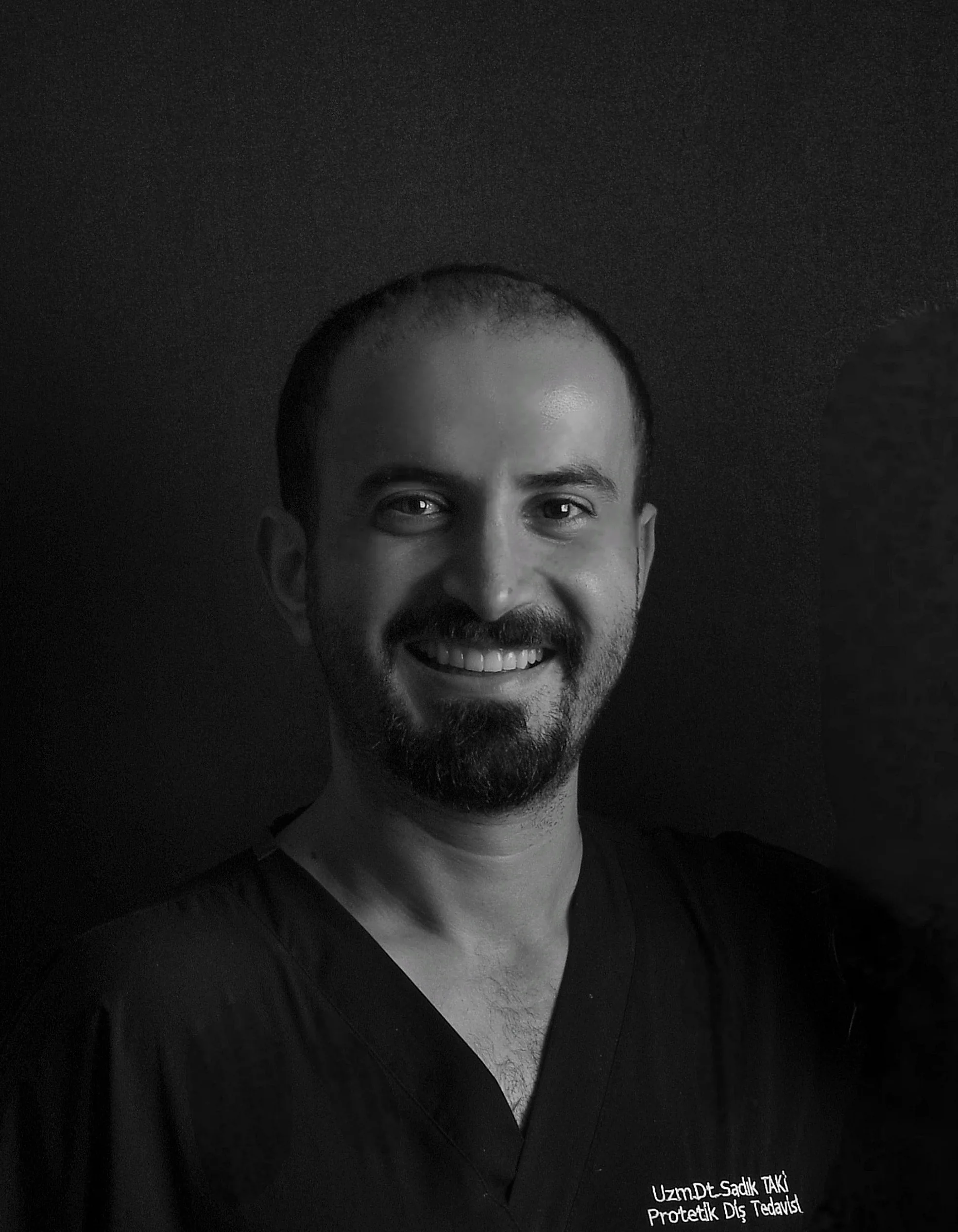
For our own clinic, you can check each of these boxes yourself: Dr. Sadık Taki's academic background and publications are documented on his profile page, independent patient experiences are collected on our reviews page, and the written warranty terms are public on our guarantee page. Any reputable clinic should make this level of verification effortless.
Questions to Ask Before You Pay a Deposit
- Veneers or crowns — and why, for each tooth?
- How much enamel will be removed, in millimetres?
- Which brand and material, and can I see the certification?
- Who exactly is my dentist, and what is their background?
- Is there a try-in stage before final bonding?
- What does the written guarantee cover, and for how long?
- What happens if I need an adjustment after I fly home?
The pattern in the answers matters more than any single answer. Clinics with nothing to hide answer quickly, specifically and in writing.
What a Safe Veneer Process Looks Like in Antalya
A properly run veneer trip takes five to seven days. Day one: examination, X-rays, smile design and an honest conversation about whether veneers suit you at all — thin enamel, heavy grinding or significant misalignment may point to other options first. Days two to three: conservative preparation and precise impressions or digital scans, with quality temporaries fitted. Days four to six: try-in of the finished veneers, checking shade, shape and bite before final bonding, then cementation and final adjustments. Patients wanting a broader transformation often combine veneers with whitening or crowns as part of a full Hollywood smile in Antalya — the same safety principles apply, tooth by tooth.
The Price Question, Answered Honestly
Veneers in Turkey typically cost 60-70% less than in the UK — not because of lower quality, but because clinical salaries, laboratory fees and running costs are genuinely lower, and the volume of international patients creates efficient, specialised workflows. That said, within Turkey the cheapest offers usually cut the corners that matter: material grade, lab time and the try-in stage. Treat the mid-market itemised quote as your benchmark, not the rock-bottom advert. For the wider safety picture beyond veneers, our guide on whether it is safe to get teeth done in Turkey goes deeper into regulation and standards.
The Bottom Line
Veneers in Turkey are as safe as the clinic you choose. Verify the dentist, demand a tooth-by-tooth written plan, insist on named materials and a try-in stage, and be suspicious of speed and rock-bottom prices. Do that, and you get the same clinical standard as home — at a fraction of the cost, with a week by the Mediterranean included. Every mouth is different, so have your own case assessed before deciding anything.
Send us your photos or X-rays and receive a free, honest assessment of whether veneers are right for you — including when the answer is no.
Ready to Transform Your Smile?
Book your free consultation with our specialist team today.
Schedule Consultation