
Can Veneers Fix Crooked Teeth?
Dental Expert
TABLE OF CONTENTS
It is one of the most common questions we hear at consultation: can veneers fix crooked teeth, or do I need braces first? The honest answer is that it depends on how crooked your teeth actually are. Veneers can visually straighten mild rotations, small overlaps and uneven edges in as little as a week — something no orthodontic treatment can match for speed. But when the misalignment is moderate or severe, forcing veneers onto crooked teeth means grinding away healthy enamel, and a responsible dentist will tell you so before you book a flight.
This guide explains exactly when veneers are a good solution for crooked teeth, when they are not, and how to tell whether a clinic is giving you honest advice.
How Veneers for Crooked Teeth Actually Work
A veneer is a thin shell of porcelain or composite bonded to the front surface of a tooth. It does not move the tooth. Instead, it changes the shape, angle and colour of the visible surface, so the tooth appears straight even though the root position has not changed. Dentists sometimes call this "instant orthodontics", although the term is slightly misleading — nothing orthodontic is happening.
To create this illusion, the dentist reshapes the tooth first. A tooth that leans outwards needs more enamel removed so the veneer sits flush with its neighbours; a tooth that leans inwards needs a slightly thicker veneer to bring it forward. This is the key point: the more crooked the tooth, the more tooth structure must be removed to make a veneer work. That trade-off is what separates a sensible case from a risky one.
When Veneers Are a Good Option
In our experience, veneers work well for crooked teeth when the problem is cosmetic rather than functional. Good candidates typically have:
- Mild rotations — a front tooth twisted a few degrees out of line
- Minor overlapping — one edge slightly in front of its neighbour
- Uneven lengths or worn edges — teeth that look crooked because their edges do not line up
- Small gaps combined with slight misalignment — veneers can close spaces and align edges at the same time
- A healthy bite — upper and lower teeth meet correctly when you close your mouth
For these patients, porcelain veneers in Antalya can deliver a straight, bright, natural-looking smile in five to seven days, whereas orthodontic treatment would take 6 to 18 months to achieve a similar visual result. Many patients also choose veneers because they solve several problems at once: alignment, colour, shape and old discoloured fillings, all in one treatment plan.
When Braces or Invisalign Are the Better Choice
Veneers are the wrong tool when crookedness is moderate to severe, or when the bite itself is the problem. We typically recommend orthodontics first if you have:
- Significant crowding — teeth overlapping heavily or pushed well out of the arch
- Bite problems — a deep overbite, underbite or crossbite that affects how teeth meet
- Teeth tilted at strong angles — masking these with veneers would require removing an unsafe amount of enamel, sometimes exposing the inner dentine or requiring root canal treatment
- Very healthy, undamaged teeth — if your only concern is alignment and your teeth are otherwise perfect, moving them with Invisalign clear aligners preserves all your natural enamel
There is also a middle path many patients do not know about: short-term alignment followed by veneers. A few months of aligner treatment can bring badly positioned teeth into a reasonable range, after which minimal-preparation veneers finish the cosmetic result. This combination protects tooth structure and usually produces the most stable long-term outcome.
Veneers vs Orthodontics for Crooked Teeth: Side by Side
| Factor | Veneers | Braces / Invisalign |
|---|---|---|
| Treatment time | 5–7 days | 6–24 months |
| Best for | Mild misalignment plus colour or shape issues | Moderate to severe crowding and bite problems |
| Changes tooth position | No — cosmetic illusion only | Yes — teeth physically move |
| Enamel removal | Yes, usually 0.3–0.7 mm | None |
| Also fixes colour and shape | Yes | No |
| Reversible | No (except some no-prep cases) | Yes, though retainers are needed |
| Typical lifespan of result | 10–15 years, then replacement | Permanent with retainer wear |
What an Honest Assessment Looks Like
Because veneers are faster and more profitable than referring a patient for orthodontics, some clinics recommend them for teeth that are simply too crooked. As a prosthodontist, I see the consequences of this: over-prepared teeth, nerve damage, and veneers that fail early because the underlying bite was never corrected.
A trustworthy assessment should include:
- A bite evaluation — photographs and a scan of how your upper and lower teeth meet, not just how the front teeth look
- A clear statement of how much enamel will be removed — and whether any tooth is at risk of needing root canal treatment
- Alternatives on the table — if aligners or a combined approach would protect your teeth better, you should hear about it, even if it takes longer
- A digital preview — a mock-up or digital smile design showing how veneers would sit on your specific alignment
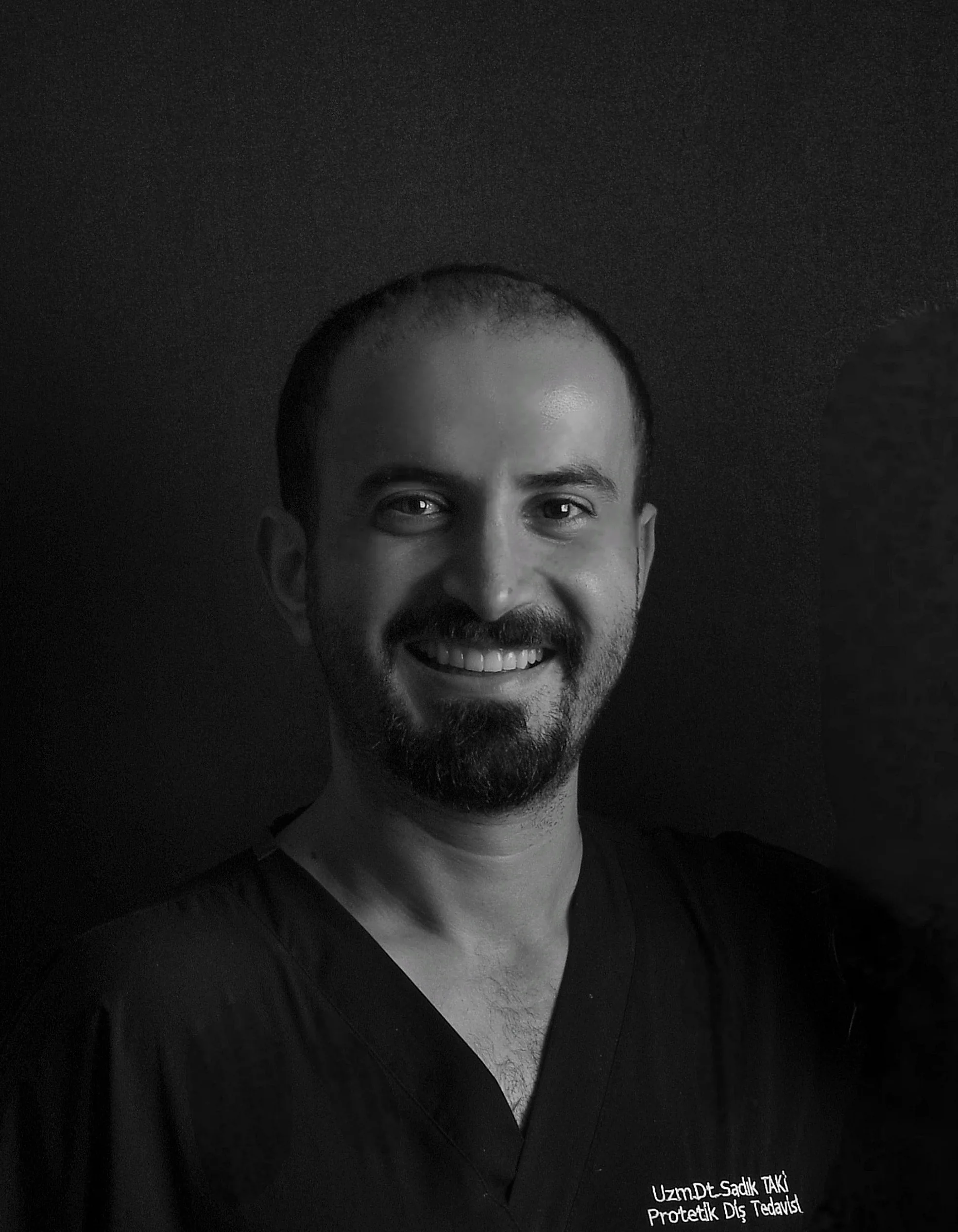
At Taki Dent every veneer case is planned by Dr. Sadık Taki, whose academic background is in prosthodontics — the specialty that deals precisely with this balance between aesthetics and tooth preservation. If your teeth are too crooked for veneers alone, you will be told before treatment begins, not after.
How Many Veneers Do Crooked Front Teeth Need?
Most patients correcting mild crookedness need veneers in even numbers for symmetry — typically 6 to 10 across the upper front teeth. Treating a single crooked tooth is possible, but matching one veneer to natural neighbouring teeth is technically demanding, and results are usually more harmonious when the visible smile line is treated as a set. For patients who want alignment, whitening and reshaping together, a full Hollywood Smile makeover treats 16 to 20 teeth for a completely uniform result.
Cost and Practicalities in Turkey
In most Western countries, a single porcelain veneer costs between 600 and 1,500 GBP, so treating six to eight teeth quickly becomes a five-figure sum. In Antalya, the same treatment with premium materials such as E.max porcelain typically costs 60 to 70 percent less, including the digital design, temporary veneers and final fitting within one visit of five to seven days. You can review current figures on our dental treatment price list, and see real alignment corrections in our before and after gallery.
The Bottom Line
Veneers can fix the appearance of crooked teeth when the misalignment is mild and the bite is healthy — and in those cases they deliver in a week what orthodontics delivers in a year, while also transforming colour and shape. For moderate or severe crookedness, aligning the teeth first is safer, protects your enamel, and produces veneers that last longer. The right answer depends entirely on your individual case, which is why an honest clinical assessment matters more than any general rule.
Send us a few photos of your smile and our specialists will tell you honestly whether veneers, aligners or a combination is right for you — the consultation is free.
Ready to Transform Your Smile?
Book your free consultation with our specialist team today.
Schedule Consultation