
The Role of AI in Turkish Dentistry: The Taki Dent Experience (2026)
Dental Expert
TABLE OF CONTENTS
Artificial intelligence and digital workflows have quietly reshaped modern dentistry, and Turkey's leading clinics are among the fastest adopters. At Taki Dent in Antalya, AI and digital tools are not a marketing headline — they are part of how we plan, deliver and verify treatment for our international patients. This overview explains, honestly and without the hype, where AI genuinely helps in 2026, where it does not, and how you can tell the difference when you are comparing clinics from another country.
What AI actually does in a dental clinic
It helps to be precise about the word. In dentistry, "AI" almost always means software that measures, segments and flags — it outlines a nerve canal on a scan, segments bone from soft tissue, proposes tooth proportions, or checks that a planned implant position stays within safe anatomical limits. It is a measuring and planning aid used by a clinician, not an autonomous decision-maker.
That distinction matters for a patient travelling abroad, because it tells you what to ask about. The useful question is not "do you use AI?" — almost every clinic will say yes. The useful question is "which part of my plan was produced by software, and which specialist reviewed and signed it off?"
AI-assisted diagnostics and radiographic analysis
Every implant and full-mouth case begins with a 3D CBCT scan. AI-assisted radiographic tools help flag anatomical landmarks — nerve canals, sinus floors, bone density — and support the clinician in measuring available bone accurately. The software does not replace the surgeon; it gives the specialist a clearer, faster picture so that risks are identified before treatment, not during it.
For a patient travelling from abroad on a limited schedule, this predictability is the whole point. Surprises found on the day of surgery are what turn a planned two-visit treatment into an unplanned third trip. A scan that has been properly measured and reviewed in advance is what allows us to tell you, before you book a flight, whether you will need bone grafting or a sinus lift — and what that changes about your timeline and your quote.
Digital Smile Design: preview before you commit
With intraoral scanners (no uncomfortable traditional impressions) and Digital Smile Design software, we can show you a preview of your proposed smile before any irreversible treatment begins. You see proportions, tooth shape and alignment, and can discuss changes with the prosthodontist while everything is still on screen. This is one of the clearest patient-facing benefits of digital dentistry: fewer surprises and a shared plan.
We cover the appointment itself in more detail in our guide to seeing your new smile before treatment, and the step-by-step scanning and facial-analysis process in what happens at a digital smile design appointment.
Guided implant surgery
Where the case is suitable, implants are placed using computer-guided surgery — the 3D plan is transferred to a surgical guide for precise positioning and angulation. In suitable immediate-loading cases, implants and temporary fixed teeth may be delivered during your first visit. The definitive permanent restoration is normally fitted after osseointegration during a second visit, typically a few months later. Not every patient is a candidate for immediate loading, and we will tell you honestly which pathway fits your case.
If you want the clinical detail on how digital planning translates into placement accuracy, see our article on guided implant surgery and what the evidence shows.
Precision restorations with a digitally integrated own digital laboratory
Crowns, veneers and bridges are produced with CAD/CAM precision through our digitally integrated own digital laboratory located near the clinic. Digital impressions are transferred directly to production, which keeps the number of appointments to a minimum and improves the consistency of the final result. Restorative work such as crowns and veneers can often be completed within a short visit; implant treatment, as explained above, is normally staged across two visits.
The full equipment list — CBCT, intraoral scanning and CAD/CAM — is set out on our clinic technology page.
How a digital workflow actually changes your travel schedule
This is the part most technology articles skip, and it is the part that affects you most. A properly digital workflow changes when decisions get made, not just how they are made:
- Before you travel: you send photographs and, if you have one, a recent X-ray or CBCT file. We give you an indicative assessment and an itemised written quote. This stage is deliberately conservative — a remote assessment is a shortlist of likely options, not a diagnosis.
- Day one in Antalya: CBCT scan, intraoral scan, clinical examination. The plan is confirmed or corrected against what the scan actually shows, and the final written plan and price are agreed before any treatment starts.
- The rest of visit one: surgery and, where suitable, immediate temporaries — or the restorative work itself for veneer and crown cases.
- Visit two: the definitive restoration, after healing. For implant cases this is normally a few months later.
The single most important sentence in that list is the second one: a remote quote is provisional until a scan confirms it. Any clinic that guarantees a final price and a final treatment plan from photographs alone is telling you something about its process, not about its technology. Our guide to planning a dental trip to Turkey sets out the sequence in full.
What happens to the photos and X-rays you send
If you are asked to upload dental images to a clinic in another country, you are sending health data across a border, and you are entitled to ask what happens to it. Taki Dent operates under Turkey's personal data protection law (KVKK), which is modelled on the European GDPR framework, and international patients retain the rights that framework gives them: to know why data is held, to receive a copy of their records, and to ask for deletion.
Practical questions worth asking any clinic before you upload anything: who receives the images, whether they are stored or passed to a third-party marketing agency, whether your before-and-after photographs may be published, and whether you can withdraw that permission later. At Taki Dent, case photographs are only published with separate written consent, and that consent can be withdrawn.
The AI risks patients should know about
Most articles about AI in dentistry only list benefits. In 2026, the technology has also created new ways for patients to be misled, and knowing them is genuinely useful when you are comparing clinics:
- AI-generated "results" images. Image generators can produce a perfect smile in seconds. A legitimate digital preview is derived from your scan and photographs and is shown to you alongside them; a generated image is not evidence of anything. Ask whether a simulation came from your own intraoral scan.
- Before-and-after galleries that are not the clinic's own cases. Ask whether the case was treated in that clinic, by which clinician, and whether you can see the same patient from more than one angle.
- AI-written reviews and content. A high volume of recent, similarly-worded five-star reviews is a warning sign, not a recommendation. Look at the distribution and the detail of reviews rather than the average alone.
- Chatbots presented as clinical advice. An automated first reply is fine for logistics. A treatment recommendation should come from a named, registered clinician you can look up. We cover the wider pattern in how to avoid dental scams in Turkey.
What "AI-driven standards" should mean for patients
Technology is only as trustworthy as the clinic using it. When you research any Turkish clinic, look beyond the tools for verifiable signals:
- Licensing: Taki Dent is licensed and regulated by the Republic of Türkiye Ministry of Health and is an Authorised International Health Tourism Facility (certificate no. ST-6335, dated 18 September 2025).
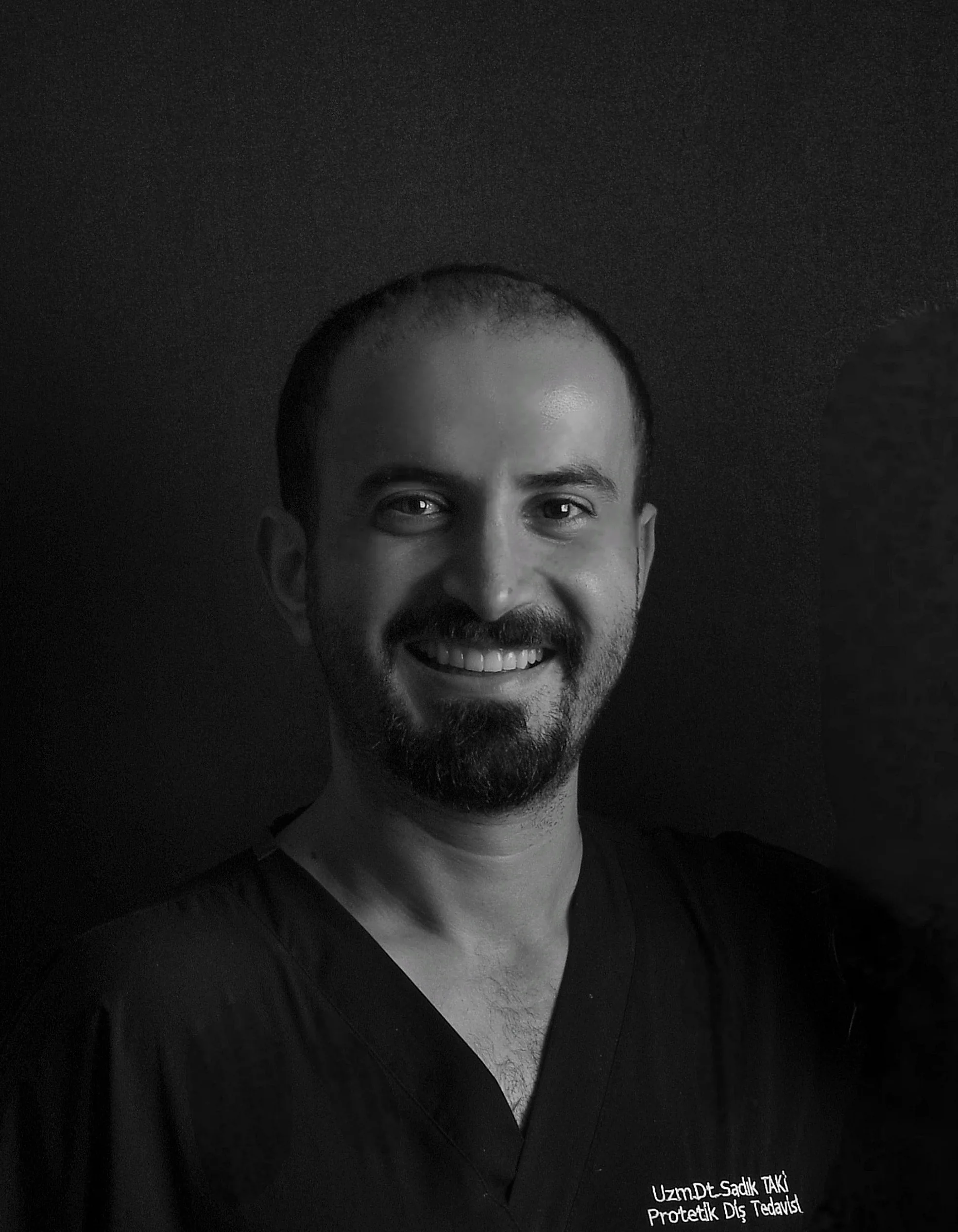
- A named, registered clinician: treatment is led by Dr. Sadık Taki, a Ministry-of-Health-registered Specialist Prosthodontist (reg. 61875), with implant surgery performed by an oral and maxillofacial surgeon.
- Independent recognition: a two-time European Medical Awards 2025 winner (Dental Implantology and International Patient Care), verifiable on the organiser's official laureates page.
- Premium materials: implant systems including Straumann and Nobel Biocare, backed by manufacturer warranties.
- Real reviews: a genuine, verifiable Google rating rather than unverifiable claims.
- A written guarantee: terms you can read before treatment, not after — see our guarantee page.
- Transparent pricing: a written, itemised treatment plan before you travel — see our prices page.
Eight questions to ask any clinic that advertises AI dentistry
You can test almost any clinic's claims with these, by email, before you commit to anything:
- Which specific steps of my plan use software, and who reviews the output?
- Is the CBCT scan taken in your own clinic, and do I receive a copy of the file?
- Was the smile simulation generated from my own scan, or is it an illustration?
- Which named clinician will carry out the surgery, and where is their registration listed?
- Is the laboratory in-house or a partner, and where is it located?
- What in this quote could change after the scan, and by how much?
- What are the written guarantee terms, and what voids them?
- Who do I contact after I fly home, and how quickly do they respond?
A clinic that answers all eight in writing is demonstrating more than any technology list can. Our checklist of what to check before dental treatment abroad goes further into the documentation you should have in hand.
The honest limits of AI in dentistry
AI improves measurement, planning and communication. It does not diagnose your mouth, decide whether to save or remove a tooth, judge whether your bone will accept an implant, or perform surgery. It cannot examine you, and it does not carry clinical responsibility for the outcome. Those remain with a qualified specialist.
At Taki Dent, every case is led by a specialist prosthodontist, with implant surgery performed by an oral and maxillofacial surgeon. Digital tools make that expertise more precise and easier to explain — they do not replace it. Any clinic that presents technology as a substitute for clinical judgement is describing a marketing position, not a standard of care.
Frequently asked questions
Does AI make dental treatment in Turkey safer?
Indirectly. It improves the accuracy of planning and reduces the chance of an intra-operative surprise, which matters most for patients on a fixed travel schedule. Safety itself comes from licensing, the clinician's specialty registration, sterilisation protocols and materials — not from software.
Can I get a diagnosis and a final price from photographs?
No. Photographs support an indicative assessment and a provisional quote. A diagnosis and a final, itemised price require a CBCT scan and a clinical examination.
Is a digital smile preview what my teeth will really look like?
It is a close guide to shape, proportion and alignment, produced from your own scan. Final colour and surface texture also depend on the ceramic chosen and on your remaining natural teeth, which is why the preview is discussed with the prosthodontist rather than simply handed over.
Does guided surgery mean the procedure is done by a robot?
No. A surgical guide is a physical template produced from the 3D plan. The surgery is performed by the surgeon; the guide constrains position and angulation to what was planned.
Do I still need two visits if the clinic is fully digital?
For implant treatment, normally yes — the wait is biological, not technical. Bone needs time to integrate with the implant before the definitive restoration is fitted. Digital workflows shorten appointments and reduce revisions; they do not shorten healing.
How do I verify that a clinic really has this equipment?
Ask for the scan to be taken on site during your first appointment, ask for a copy of your CBCT file, and ask where the laboratory is. Equipment claims are easy to make and easy to check.
A specialist-led assessment of your own case
If you would like an AI-supported, specialist-led assessment, you can request a free online consultation and a personalised treatment plan. Send your photographs or an X-ray, and our team will explain your options clearly — including the realistic number of visits, what could change after the scan, and the full itemised cost — before you make any decision.
Ready to Transform Your Smile?
Book your free consultation with our specialist team today.
Schedule Consultation