
Dental Bridge vs Implant: Which Should You Choose?
Dental Expert
TABLE OF CONTENTS
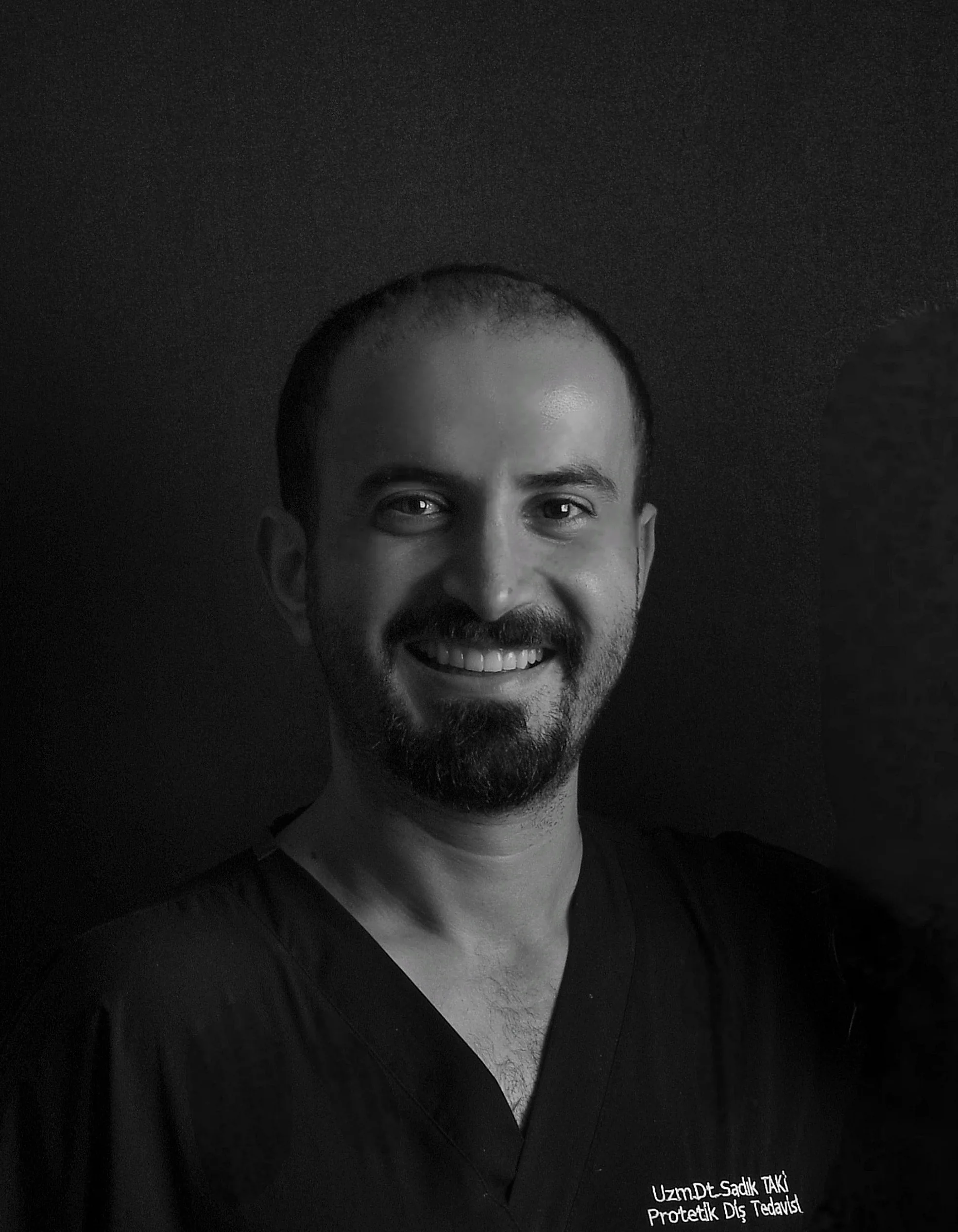
When a tooth is lost, the dental bridge vs implant question is usually the first real decision a patient faces — and it is a genuinely close call more often than the internet suggests. Implants are frequently presented as the automatic gold standard, yet there are situations where a well-made bridge is the faster, kinder and even the wiser choice. As a prosthodontist, Dr. Sadık Taki designs and fits both every week at Taki Dent in Antalya, which puts him in a good position to give you the balanced version: what each option actually involves, where each wins, and how to work out which suits your mouth, timeline and budget.
How Each Option Works
The dental bridge
A bridge replaces a missing tooth by anchoring an artificial tooth (the pontic) to crowns cemented onto the natural teeth on either side of the gap. Those anchor teeth are reshaped to receive their crowns, and the whole structure is fitted as one piece. Modern bridges made from zirconia or porcelain are strong, natural-looking and completed quickly — typically within a single week-long visit, which is one reason dental bridges in Turkey are popular with international patients on a tight schedule.
The dental implant
An implant replaces the missing root itself: a titanium post is placed in the jawbone, fuses with it over two to six months, and then carries its own independent crown. No neighbouring teeth are touched. The trade-offs are time — most conventional cases need two visits several months apart — and a minor surgical procedure. Our page on dental implants in Antalya covers the procedure, brands and planning in detail.
Dental Bridge vs Implant: Side-by-Side Comparison
| Factor | Dental bridge | Dental implant |
|---|---|---|
| Effect on neighbouring teeth | Adjacent teeth are ground down to carry the bridge | Neighbouring teeth untouched |
| Jawbone preservation | Bone under the gap continues to shrink slowly | Chewing forces stimulate and preserve the bone |
| Surgery required | None — purely restorative | Minor surgical placement under local anaesthetic |
| Treatment time | About 5–7 days, one visit | Typically 3–6 months, usually two visits |
| Typical lifespan | Around 10–15 years with good care | Studies report survival above 90 percent at 10+ years; often decades |
| Upfront cost | Usually lower | Usually higher |
| Long-term cost | Replacement likely at least once in a lifetime | Often a one-time investment if well maintained |
| Cleaning | Requires cleaning under the pontic with floss threaders | Cleans much like a natural tooth |
| Suitability limits | Needs healthy, strong teeth on both sides of the gap | Needs adequate bone volume and reasonable general health |
When an Implant Is Usually the Better Choice
- The neighbouring teeth are healthy and untouched. Grinding down two perfect teeth to bridge one gap sacrifices sound enamel that can never be replaced. In this situation most prosthodontists, Dr. Taki included, will steer you toward an implant.
- You are young or the gap is recent. The younger you are, the longer any restoration must last — and the more decades of bone shrinkage a bridge would allow beneath the gap.
- The gap is at the back of the mouth. Molar regions take the heaviest chewing loads, and a free-standing implant handles them without stressing anchor teeth.
- You are missing several teeth in different places. Multiple gaps multiply the number of teeth a bridge strategy would need to cut down.
- You want the most durable long-term result. Long-term reviews consistently report implant survival above 90 percent beyond ten years, and many implants last decades.
When a Bridge Deserves Serious Consideration
- The adjacent teeth already need crowns. If the teeth beside the gap are heavily filled, root-treated or broken down, they need crowning anyway — and a bridge then replaces the missing tooth at little extra biological cost. This is the classic case where a bridge is arguably the smarter option.
- Bone volume is inadequate and you prefer to avoid grafting. Implants need bone; if the site has shrunk, grafting adds time, cost and a further procedure. A bridge sidesteps the issue entirely.
- Medical factors rule out surgery. Certain conditions and medications make even minor surgery unwise. A bridge is a fully non-surgical solution.
- Time is critical. A bridge is finished in under a week; an implant journey spans months. For patients who cannot make two trips abroad, this practical point sometimes decides the matter.
- Budget is fixed and the anchor teeth are suitable. A quality zirconia bridge remains an excellent, proven restoration — far better than leaving a gap, which allows neighbouring teeth to drift and the bite to collapse over time.
What About Cost?
In general terms, a three-unit bridge costs less upfront than a single implant with its crown, in Turkey as everywhere else. The long-term picture is more nuanced: bridges typically need replacing after ten to fifteen years, while a well-maintained implant may never need replacing, so lifetime costs often converge or favour the implant. Because both treatments cost a fraction in Antalya of what they cost in the UK or Ireland, many patients find the price difference between the two options shrinks to the point where the clinical arguments can decide. You can compare current figures for both treatments on our transparent price list.
The Hybrid Answer: Implant-Supported Bridges
When three or more teeth in a row are missing, the choice is not one implant per tooth or nothing. An implant-supported bridge uses two implants to carry three or four teeth, combining the bone-preserving benefit of implants with the efficiency of a bridge — and no natural teeth are touched. Taken to its logical conclusion, this is exactly how All-on-4 full-arch treatment restores an entire jaw on just four implants. For larger gaps, this middle path is often the best value of all.
How We Decide at Taki Dent
The honest answer to "bridge or implant?" is always "show me the X-ray". At your assessment we examine the condition of the neighbouring teeth, measure bone volume on a 3D CT scan, review your medical history and — just as importantly — listen to your constraints on time, travel and budget. Both options are offered on their merits; as a specialist in restorative dentistry, Dr. Sadık Taki has no reason to favour one over the other beyond what serves your mouth best, and either way the work is covered by our written guarantee.
"If the teeth beside the gap are virgin, I fight for the implant — cutting healthy enamel is a debt the patient repays for life. If those teeth are already broken down and need crowns regardless, a bridge is often the elegant answer. The mistake is deciding before looking." — Dr. Sadık Taki
Send us a photo or X-ray and book a free consultation — our specialists will tell you honestly which option suits your case, with a fixed quotation for both.
Ready to Transform Your Smile?
Book your free consultation with our specialist team today.
Schedule Consultation