

Dental Crown Procedure: What to Expect Before, During & After
Dental Expert
TABLE OF CONTENTS
A dental crown is a custom-made cap that covers a damaged, weakened or heavily filled tooth to restore its shape, strength and appearance. Here is exactly what the procedure involves at Taki Dent, and how to care for your crown afterwards.
What a crown is and when it is needed
A crown — most often made of zirconia or IPS e.max ceramic — is used when a tooth is too broken down for a simple filling: after a large fracture, extensive decay, or root-canal treatment, or to restore an implant or anchor a bridge. Because a crown requires more tooth preparation than a filling, we only recommend one when a simpler restoration will not last.
Step by step
1. Assessment and planning
We examine the tooth, take X-rays where needed, and confirm that a crown is the right choice rather than a filling, inlay/onlay, or (if the tooth cannot be saved) an implant. Any active decay or gum disease is treated first.
2. Preparing the tooth
The tooth is shaped under local anaesthetic and a precise digital scan or impression is taken. A temporary crown protects the prepared tooth in the meantime.
3. Making the crown
The definitive crown is manufactured at our own digital laboratory, which typically takes about 3–5 days.
4. Fitting
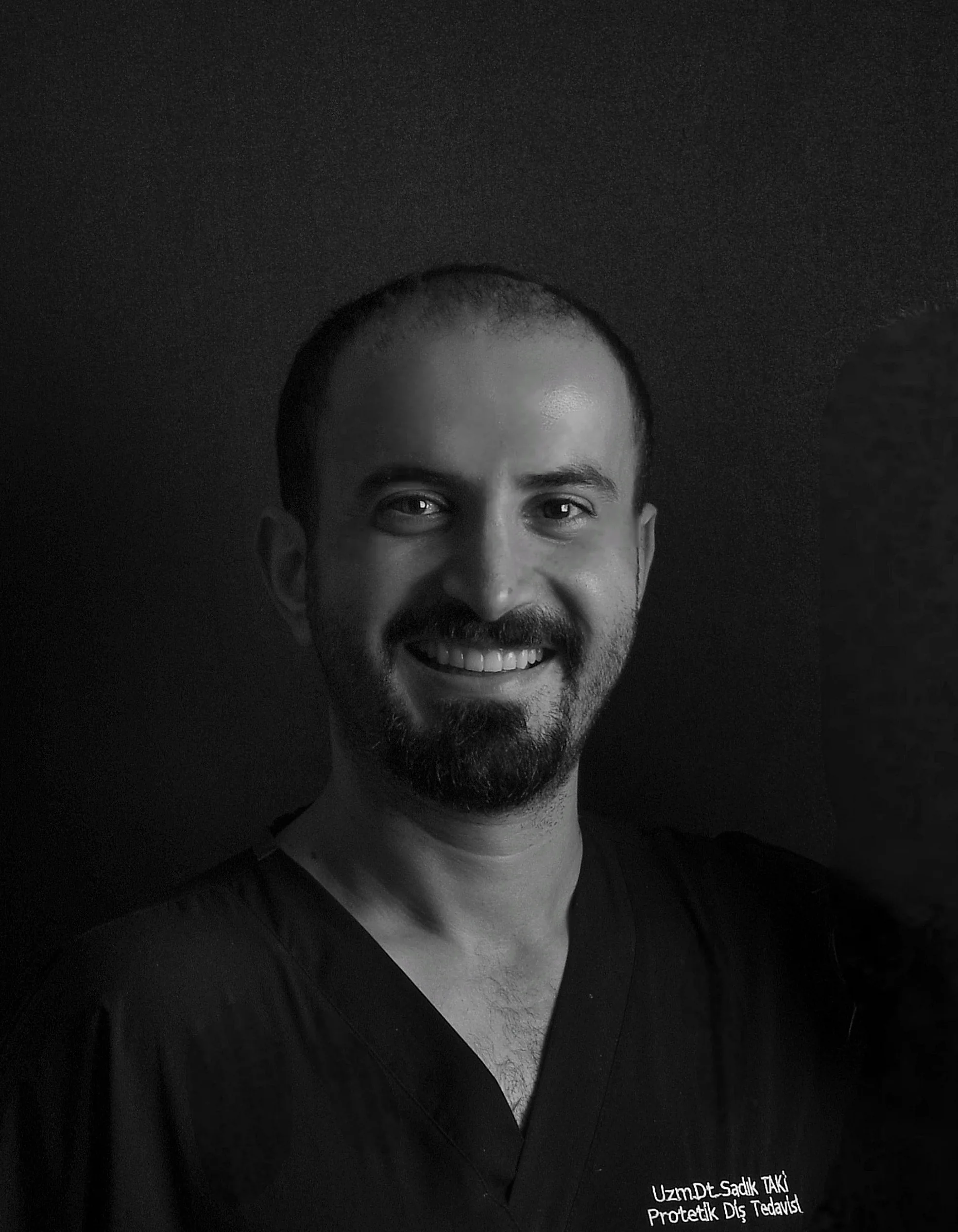
At the second visit the crown is checked for fit, bite and shade, then bonded in place. The whole process usually spans about 5–7 days, confirmed before you travel. Crowns are designed and fitted by our specialist prosthodontist, Dr Sadık Taki (Ministry of Health specialty registration 61875).
Is it painful?
The preparation is done under local anaesthetic, so it is not painful. Afterwards, mild sensitivity to hot and cold is common and usually settles; temporary gum tenderness around the new crown can occur. There is no surgical recovery.
Aftercare
Avoid biting very hard objects, keep the crown margin clean with brushing and flossing, and attend regular check-ups. If you grind your teeth, a night guard is recommended to protect the crown.
Risks and longevity
Modern zirconia and e.max crowns are durable and long-lasting with good care. Less common issues include the crown debonding or fracturing, marginal decay if hygiene is poor, or the underlying tooth needing further treatment. Systematic reviews report high long-term survival for single crowns (e.g. Pjetursson et al., Clinical Oral Implants Research).
Guarantee and pricing
Crowns are covered by our written guarantee, with terms depending on the material — see the guarantee page for current coverage; corrective work covered by the guarantee is free at the clinic. For the current per-tooth price, and any root canal or core build-up that may be needed, see our prices page. This article is general information and does not replace an individual clinical assessment.
Ready to Transform Your Smile?
Book your free consultation with our specialist team today.
Schedule Consultation